Biomedical Engineering
The Bachelor of Science in Biomedical Engineering (BME) at the Daniel Felix Ritchie School of Engineering & Computer Science is a cross-disciplinary program that blends engineering, life sciences, and artificial intelligence (AI).
You’ll learn by doing through opportunities - both inside and outside of the classroom - to analyze, model, design, and realize biomedical devices, systems, components, and processes. With a strong emphasis on translational biomedical innovations, both in industry and research, the program prepares you for careers at the intersection of healthcare, technology, and engineering.
Start your engineering journey at the Ritchie School and see why Biomedical Engineering is a good fit for you.
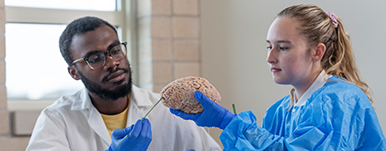


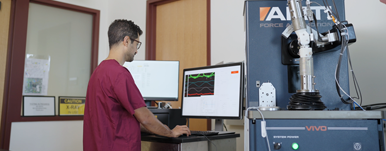
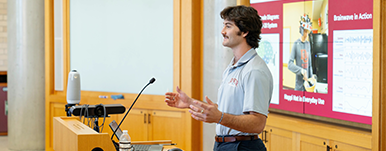

Grow in a Supportive and Purpose‑driven Community
Shape Your Unique Path
Shape your unique path with either of these options: a BS or BS with Pre-Med or customize your BME degree with minors in engineering, computing, or business to prepare you for the workforce.
Your personalized track will prepare you for a wide range of career and educational pathways. You will:
- learn how engineering principles apply to healthcare and biological systems;
- build a strong foundation in common engineering concepts, technical, analytical, and problem-solving skills;
- have a shared engineering curriculum, allowing you to explore engineering alongside students from other majors and collaborate across disciplines;
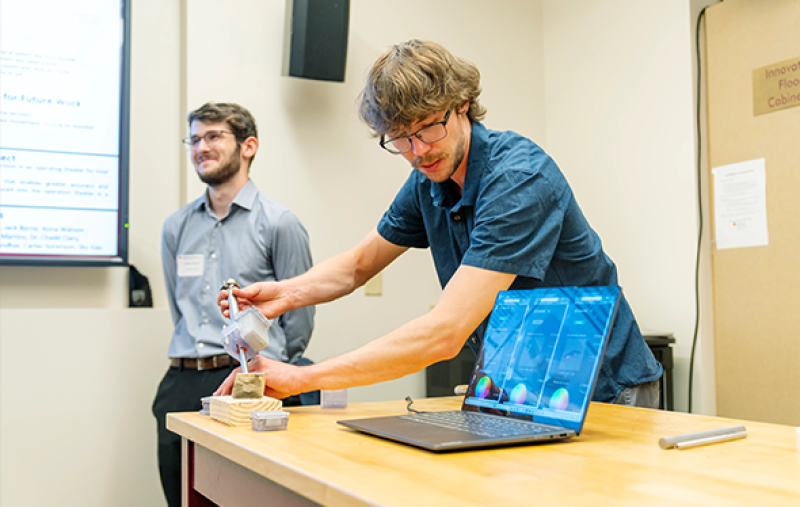
- complete a 30-week engineering design capstone project, through which you’ll gain experience in teamwork, real-world problem solving, and multidisciplinary thinking - all of which are skills that employers are looking for in today's engineers.
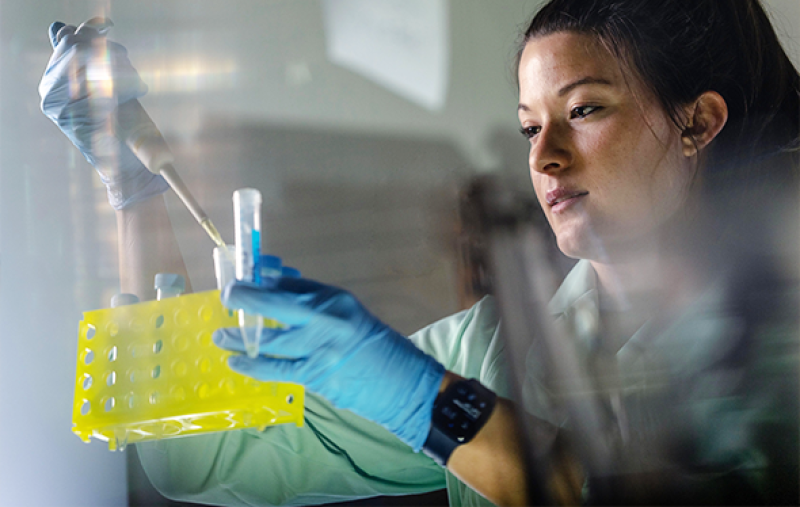
Coursework includes:
- Biomaterials
- Introduction to Biomechanics
- Biotransport
- Bioinstrumentation
- Cell Mechanics and Mechanotransduction
- Biomedical Engineering Laboratory
- Introduction to Regulatory Affairs and more.

Ready to Apply?
Start your Biomedical engineering journey. With a degree from Ritchie School you can stand out professionally, shape your unique path, learn by doing, and thrive with support.
1,300 Jobs Openings Projected Each Year from 2024 to 2034
$106,950 Median Annual Pay for Bioengineers in 2024
22,200 Number of Jobs Open in 2024
Application Information
Take the first step toward your biomedical engineering career at the Ritchie School and start your application today.