Applied Data Science and AI: Understanding Fundamentals to Build the Future
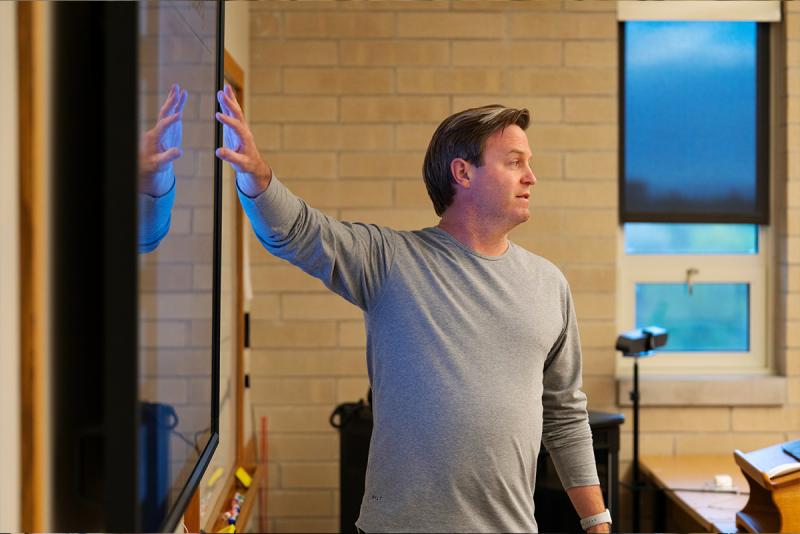
For all the excitement surrounding artificial intelligence, most organizations aren't looking for someone to build the next viral AI tool. They’re looking for people who can solve problems. That’s one of the biggest lessons Dr. Lucas Sawle, program director of the Applied Data Science and AI master’s program at the University of Denver's Ritchie School of Engineering and Computer Science, shares with his students.
After more than a decade working in industry, Dr. Luke knows firsthand that technical expertise is only part of the equation. Success in data science and AI often comes down to understanding business challenges, identifying opportunities, and communicating solutions effectively.
“It’s not just about solving a problem,” he says. “It's about telling the story about why you solved the problem.”
This philosophy is woven throughout the Ritchie School’s Applied Data Science and AI program, where students learn more than coding and algorithms. They develop the technical foundation needed to work with machine learning, data engineering, cloud computing, large language models, and advanced analytics, while also learning how those tools create real-world value.
“We're not just throwing AI on the end of something,” he says. “We want students to know how to use these tools, but also understand what's happening behind the scenes.”
The program emphasizes a deep understanding of the concepts that power modern AI systems. Students study mathematics, programming, and theory behind machine learning and generative AI, giving them the confidence to evaluate emerging technologies rather than simply adopting the latest trend.
“What we're really trying to do is make sure students get that foundational training,” Dr. Luke explains. “When the next cool tool comes out, they have the confidence to evaluate it and decide whether it has real value.”
The Ritchie School’s practical perspective is strengthened by faculty members who bring extensive industry experience into the classroom. Through coursework, projects, and mentorship, students gain insight into what employers actually need and how technology is being used across sectors, ranging from healthcare and finance to telecommunications and government.
“It's your job to take complex things and make them simple,” Dr. Luke tells students, teaching them how to present technical findings in ways that resonate with decision-makers. The result is a graduate program that prepares students not only for today's opportunities, but for the advancements still to come.
Ready to learn more? Contact Enrollment Advisor Kevin Alt for more info.
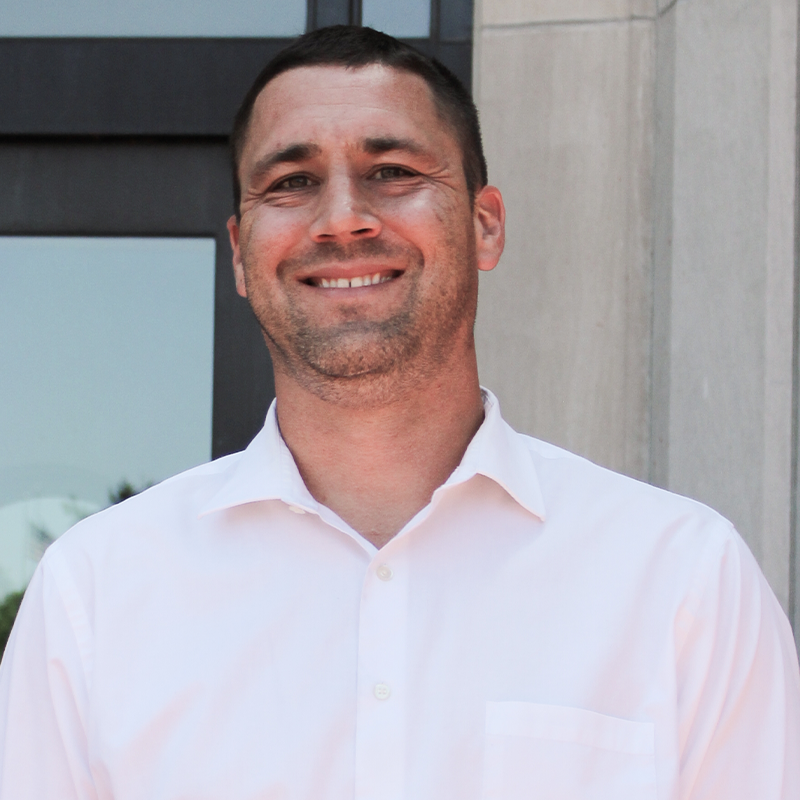 |
Kevin Alt |